

Floral teas are beautiful, fragrant, and a fun way to add something different to your usual tea routine. Many floral teas are also herbal teas, so you may want to begin with my Beginner’s Guide to Herbal Tea to learn how herbal tea differs from traditional tea. Floral tea is made with dried flowers, flower petals, or tea leaves scented or blended with flowers.
Some floral teas are light and delicate, while others are fruity, tart, or surprisingly bold. They also feel a little special. You can serve floral tea at a garden tea party, enjoy a pot during an afternoon tea for two, or curl up under a soft blanket with a warm cup while you read or watch your favorite show.
If you are curious about floral tea but aren’t sure where to begin, this guide will help you choose a flavor, brew it properly, and find something delicious to serve alongside it.
You may also enjoy my other beginner’s tea guides:
- Beginner’s Guide to Herbal Tea
- Beginner’s Guide to Lavender Tea
- Beginner’s Guide to White Tea
- Beginner’s Guide to Matcha Tea
Jump to:
What is Floral Tea
Floral Tea is made with dried flowers, flower petals, or tea leaves scented or blended with flowers.
Some floral teas, including rose, lavender, chamomile, and hibiscus, are herbal infusions. Others begin with traditional tea leaves. Jasmine tea, for example, is often made by scenting green tea leaves with jasmine blossoms.
This difference matters because an herbal floral tea is usually caffeine-free, while one made with black, green, white, or oolong tea may contain caffeine.
When you are shopping for floral tea, take a quick look at the ingredient list. It will tell you whether the package contains only flowers or a combination of flowers and traditional tea leaves.
What Does Floral Tea Taste Like?
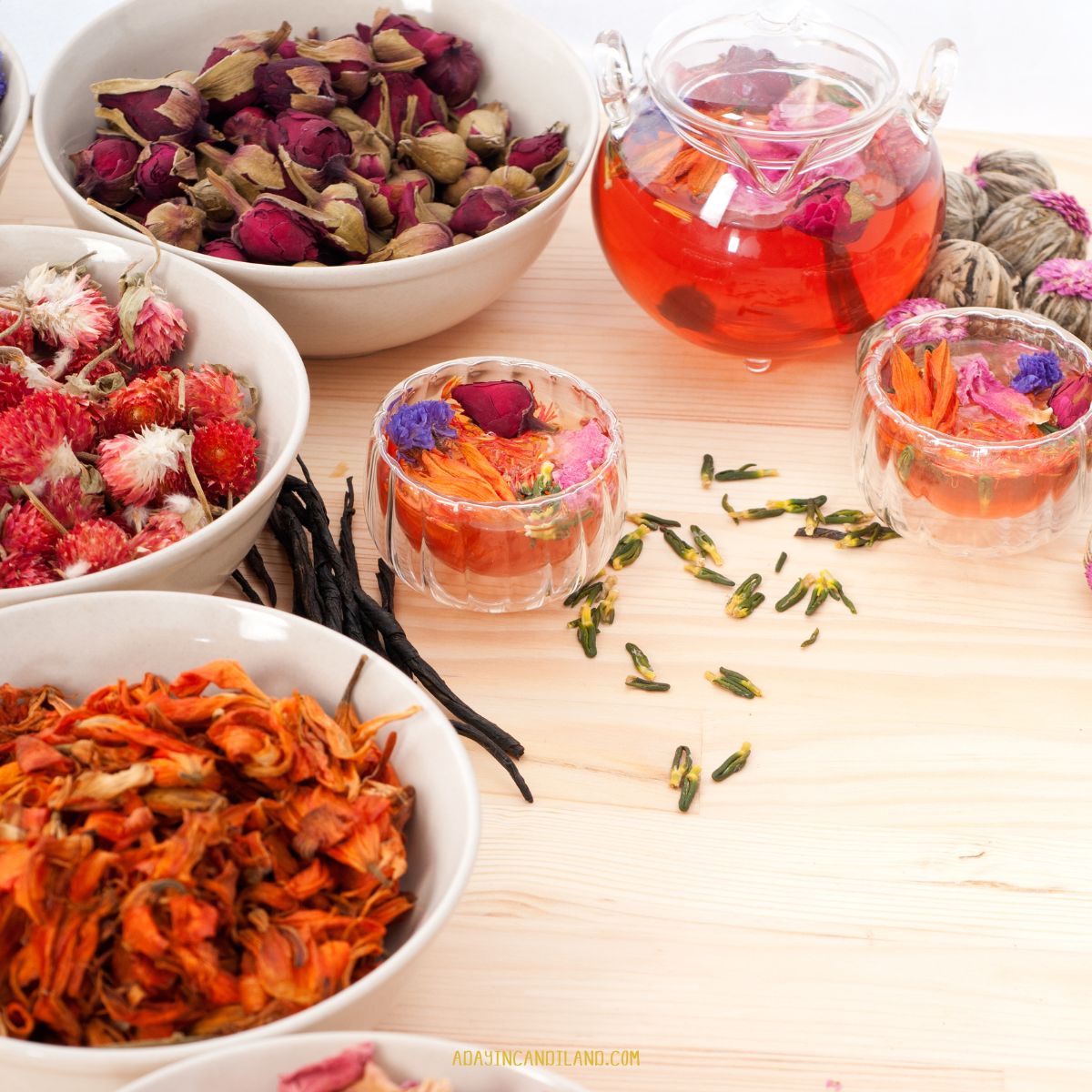
Despite the name, floral tea should not taste like perfume. A well-made cup can have delicate flower notes along with flavors that are sweet, fruity, citrusy, earthy, or tart.
If a floral tea tastes too strong, bitter, or perfume-like, you may have used too much tea or steeped it too long. Lavender is especially strong, so a little goes a long way.
I like to begin with a mild blend or use a shorter steeping time. You can always steep it a little longer next time.
Popular Types of Floral Tea
One of the most enjoyable things about floral tea is discovering how different each flower tastes. These are some of the most popular varieties to try.
Rose Tea
Rose tea is made with dried rose petals or rosebuds. It has a soft floral aroma and a lightly sweet flavor.
It can be enjoyed by itself or blended with black, green, or herbal tea. Rose also pairs nicely with berries, vanilla, honey, and citrus.
If you are planning a bridal shower, Mother’s Day tea, or garden party, rose tea is a lovely choice for the table.
Lavender Tea
Lavender tea has a much stronger fragrance than many other floral teas. Its flavor is herbal, slightly sweet, and distinctly floral.
Because lavender can quickly overpower a drink, start with a small amount. It is often blended with chamomile, mint, lemon, or Earl Grey rather than served alone.
You can learn more in my complete guide to lavender tea.
Jasmine Tea
Jasmine tea is usually green tea scented with jasmine blossoms. It has a fresh, delicate floral aroma without tasting overly sweet.
Because it normally contains green tea, jasmine tea usually has caffeine. Check the label, since caffeine levels will depend on the tea used as the base.
Jasmine tea is a nice choice for someone who enjoys traditional tea but wants to try a gentle floral flavor.
Hibiscus Tea
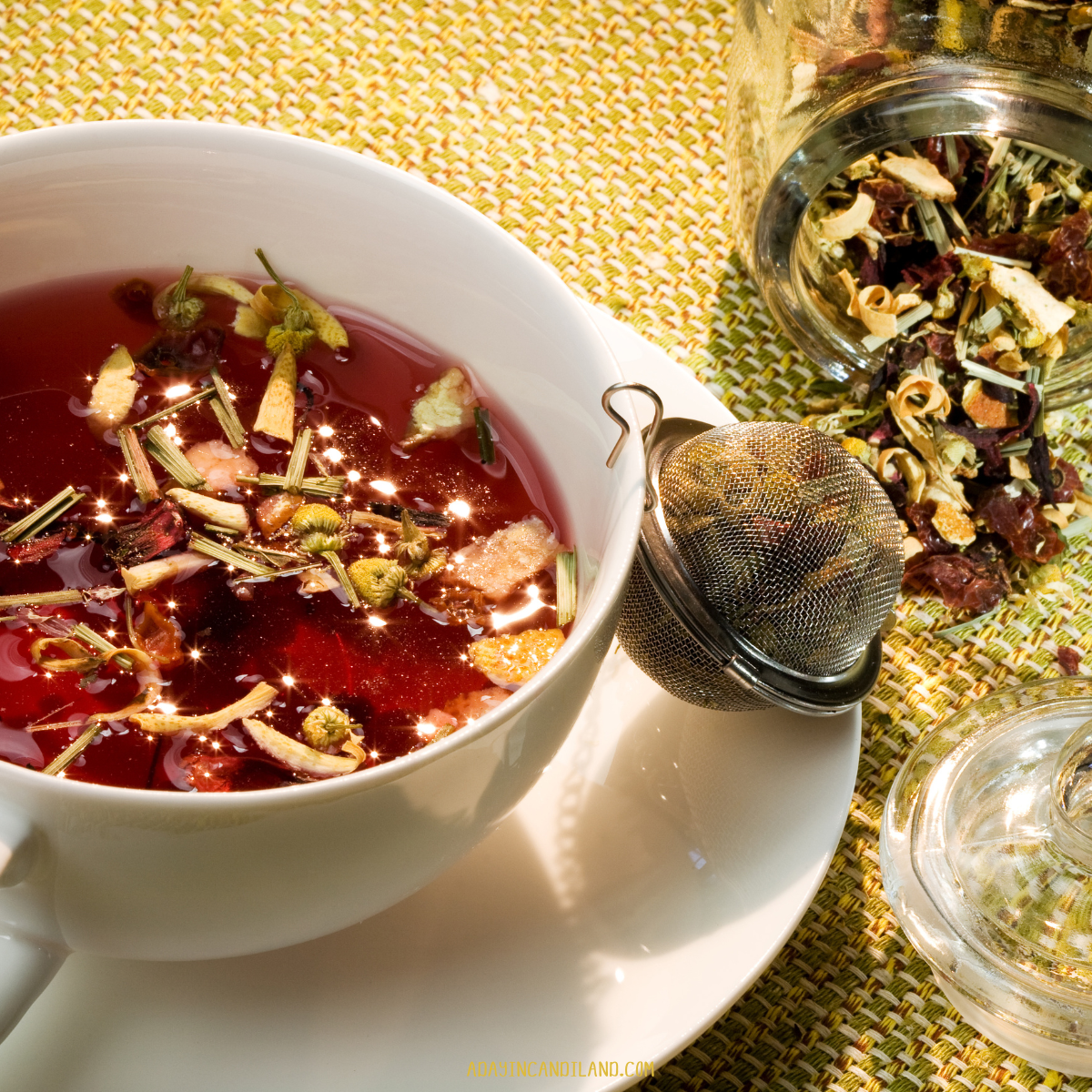
Hibiscus is one of the boldest floral teas. It has a deep ruby-red color and a tart, fruity flavor that is sometimes compared to cranberry.
It is delicious hot, but I especially enjoy it chilled. Its bright color makes it a pretty addition to a spring or summer tea table.
Try my hibiscus iced tea with rosehips when you want a refreshing floral drink.
Chamomile Tea
Chamomile has a mild flavor with soft apple, honey, and floral notes. It is naturally caffeine-free when it is brewed on its own.
This is a good choice for anyone who finds rose or lavender too fragrant. It is gentle enough to enjoy plain but also tastes good with a little honey.
Butterfly Pea Flower Tea
Butterfly pea flower tea is known for its naturally vivid blue color. When you add lemon or another acidic ingredient, the color changes from blue to purple.
Its flavor is quite mild and earthy, so it is often combined with lemon, honey, milk, or other teas. The color makes it especially fun for parties and would look extra special served in a glass teapot.
Chrysanthemum Tea
Chrysanthemum tea has a light floral flavor that may remind you of honey. It can be served plain or lightly sweetened and is traditionally enjoyed in several Asian cultures.
If you are new to chrysanthemum tea, buying a prepared tea blend is an easy place to start.
Does Floral Tea Contain Caffeine?
Pure flower teas such as rose, lavender, chamomile, hibiscus, and butterfly pea flower are naturally caffeine-free.
However, floral blends may contain caffeine when the flowers are combined with:
- Black tea
- Green tea
- White tea
- Oolong tea
Jasmine green tea and lavender Earl Grey are two common examples. Always check the package if you are avoiding caffeine or choosing an evening tea.
How to Brew Floral Tea
The package directions are always the best place to begin because brewing times can vary. If you don’t have instructions, use this as a simple starting point:
- Add approximately 1 teaspoon of dried flowers or loose floral tea to 8 ounces of water.
- Pour hot water over the tea.
- Steep for 3 to 5 minutes.
- Strain the flowers or remove the tea bag.
- Taste before adding sweetener.
Pure herbal flower teas can generally handle very hot water. Floral blends made with green or white tea may taste better with slightly cooler water.
The most important tip is not to overdo it. Too many flowers or an extra-long steep can make delicate tea bitter or overwhelmingly floral.
What Can You Add to Floral Tea?
I suggest tasting your tea before adding anything. Floral flavors can be subtle, and too much sweetener may cover them up.
If it needs something extra, try:
- Honey
- Lemon
- A small spoonful of sugar
- Fresh berries
- A slice of orange
- Fresh mint
- A splash of milk, if the tea is not too tart
Avoid adding milk to hibiscus tea because its natural acidity can cause milk to separate. Honey, lemon, berries, and mint are better additions for hibiscus.
What to Serve With Floral Tea
Floral teas pair especially well with light desserts, fruit flavors, scones, and small tea-party treats.
For a floral-themed tea table, try serving:
- Earl Grey cupcakes with lavender frosting
- Earl Grey scones
- Lemon lavender cookies
- Lemon bars
- Strawberry or blueberry scones
- Shortbread cookies
- Cucumber tea sandwiches
Lemon is one of my favorite flavors to pair with floral tea. Its brightness balances lavender, rose, chamomile, and hibiscus without covering up their delicate flavors.
Floral Tea Party Ideas
Floral tea practically comes with its own party theme. Add fresh flowers, mismatched teacups, pretty napkins, and a few small desserts, and most of the decorating is already done.
Offer two contrasting teas so guests can try something new. A mild jasmine tea and a brightly colored hibiscus iced tea would make a fun combination. You could also serve lavender tea with lemon desserts or rose tea with berry scones.
If a full party feels like too much work, invite one friend over for tea. Set out two pretty cups, make a small plate of cookies or scones, and enjoy an afternoon catching up. Tea does not need to be elaborate to feel special.
Tips for Buying and Using Floral Tea
Only use flowers or petals specifically labeled as food-grade or safe for tea. Flowers from a florist, garden center, or bouquet may have been treated with chemicals and should not be brewed.
A few more tips:
- Check the ingredient list for caffeine-containing tea leaves.
- Store dried flowers in an airtight container away from heat and sunlight.
- Begin with small amounts, especially when using lavender.
- Choose whole flowers or petals with a fresh aroma and recognizable color.
- Follow the package instructions when trying a new blend.
- Ask a healthcare professional about unfamiliar herbal ingredients if you are pregnant, nursing, taking medication, or managing a medical condition.
FAQs About Floral Tea
Chamomile and jasmine are two approachable choices. Chamomile is mild and caffeine-free, while jasmine tea has a familiar green-tea base with a gentle floral aroma. Hibiscus is a good choice if you prefer fruity and tart flavors.
Only use flowers you can positively identify as edible and that have not been treated with pesticides or other chemicals. The safest and easiest option is to purchase food-grade dried flowers prepared for culinary use.
No. Pure flower infusions are generally caffeine-free, but floral blends made with black, green, white, or oolong tea usually contain caffeine. Check the ingredients on the package.
Floral tea is a fun way to try something different from your everyday cup. You may enjoy the mild flavor of chamomile, the fresh fragrance of jasmine, the tartness of hibiscus, or the beautiful color of butterfly pea flower tea.
Start with one that sounds good to you and experiment with the brewing time until it tastes just right. Then pour it into a favorite teacup, add a cookie or scone, and curl up under a blanket with a good book. Sometimes taking a few minutes to enjoy the tea is the best part.
You can find all eight of my tea guides in one place on my Tea Guides page.
