


Have you ever wondered about the history of afternoon tea and how this lovely British tradition began? What started as a simple afternoon snack in Victorian England became a fashionable social occasion filled with tea, conversation, and delicious little treats.
I’ve always loved the tradition of afternoon tea. In fact, I loved it so much that I started a tea party business with my friend Helen back in 2005! We hosted everything from birthdays and fundraisers to Red Hat Society gatherings. If you love this tradition as much as I do, you’ll also enjoy my afternoon tea party ideas and recipes.

Quick Answer: What Is the History of Afternoon Tea?
Afternoon tea became a fashionable British social tradition during the 1840s. Anna Maria Russell, the seventh Duchess of Bedford, is widely credited with popularizing the custom of enjoying tea and light refreshments between lunch and a late evening dinner.
Although people had enjoyed tea and snacks together long before the Victorian era, the Duchess helped make afternoon tea a popular social gathering.

Jump to:
- Quick Answer: What Is the History of Afternoon Tea?
- Who Invented Afternoon Tea?
- A Little More Afternoon Tea History
- Afternoon Tea During the Victorian Era
- What Was Traditionally Served at Afternoon Tea?
- What Is the Difference Between Afternoon Tea and High Tea?
- When Is Afternoon Tea Traditionally Served?
- My Experience Hosting Afternoon Tea Parties
- 5 Fun Facts About Afternoon Tea
- How to Enjoy the Afternoon Tea Tradition at Home
- Frequently Asked Questions About Afternoon Tea
- Keeping the Afternoon Tea Tradition Alive
Who Invented Afternoon Tea?
The story begins with Anna, the seventh Duchess of Bedford, during the reign of Queen Victoria.
In the early 1800s, wealthy British families often ate dinner quite late, sometimes around 8 or 9 in the evening.
The Duchess reportedly experienced a hungry feeling during the long stretch between lunch and dinner. Her solution? A pot of tea accompanied by bread, butter, and cake.
Now, I don’t know about you, but I can certainly understand wanting a little something sweet to get through the afternoon!
What began as a private refreshment became an opportunity to invite friends over for tea and conversation.
The Duchess is associated with Woburn Abbey, where she entertained friends, and the custom eventually became fashionable among upper-class society.
A little history note: Historians point out that afternoon tea gatherings existed before the Duchess. She is best remembered for helping popularize the Victorian tradition rather than inventing the idea of drinking tea with friends.
A Little More Afternoon Tea History
Although Anna, the Duchess of Bedford, is credited with popularizing afternoon tea in the 1840s, tea drinking was already part of British society long before then. Tea became fashionable among the wealthy during the 1600s, particularly after Catherine of Braganza married King Charles II in 1662.
Over time, tea became more widely enjoyed, and the Duchess helped turn an afternoon cup of tea and light refreshments into the social tradition we know today.
Afternoon Tea During the Victorian Era
As afternoon tea became increasingly popular, it developed into a social occasion, particularly among wealthy Victorian families.
Ladies gathered in drawing rooms, enjoyed refreshments, and spent time visiting with friends.
Beautiful china, teapots, linens, and carefully arranged food became part of the experience.
Afternoon tea was about much more than drinking tea. It offered an opportunity to slow down, enjoy conversation, and spend time together.
And really, isn’t that still one of the nicest reasons to invite someone over for tea?
What Was Traditionally Served at Afternoon Tea?
The earliest afternoon tea refreshments were fairly simple, often including tea, bread and butter, and cake.
Over time, afternoon tea developed into the familiar menu many of us recognize today.
Finger Sandwiches
Small sandwiches, often with their crusts removed, became a popular savory offering. Cucumber, egg salad, and other delicate fillings are familiar favorites.
Scones with Cream and Jam
Scones are one of my favorite things to serve with tea. Although scones have a much longer history, they became a familiar part of afternoon tea menus over time.
If you’d like to know more, read about the origin of scones.
Small Cakes and Pastries
Sweet treats complete the afternoon tea menu. Depending on the occasion, you might find little cakes, shortbread cookies, fruit tarts, or pastries.
One of the things I love most about hosting tea is arranging the little desserts. Everything looks so pretty when it’s served on a tiered stand!
What Is the Difference Between Afternoon Tea and High Tea?
These two traditions are often confused, but they originally served different purposes.
Afternoon tea was a lighter meal enjoyed between lunch and dinner. It typically included tea, sandwiches, cakes, and eventually scones.
High tea was traditionally a more substantial meal associated with working families. It was eaten later in the day and might include bread, cheese, meat, or other filling dishes.
Today, some hotels and tearooms use the term high tea to describe an elaborate afternoon tea service, but historically the two were different.
When Is Afternoon Tea Traditionally Served?
Afternoon tea is generally associated with the hours between 3:00 and 5:00 PM, with 4:00 PM being a familiar traditional teatime.
Of course, when you’re hosting at home, you can choose whatever time works best for your guests.
I think the company matters much more than the clock!
My Experience Hosting Afternoon Tea Parties
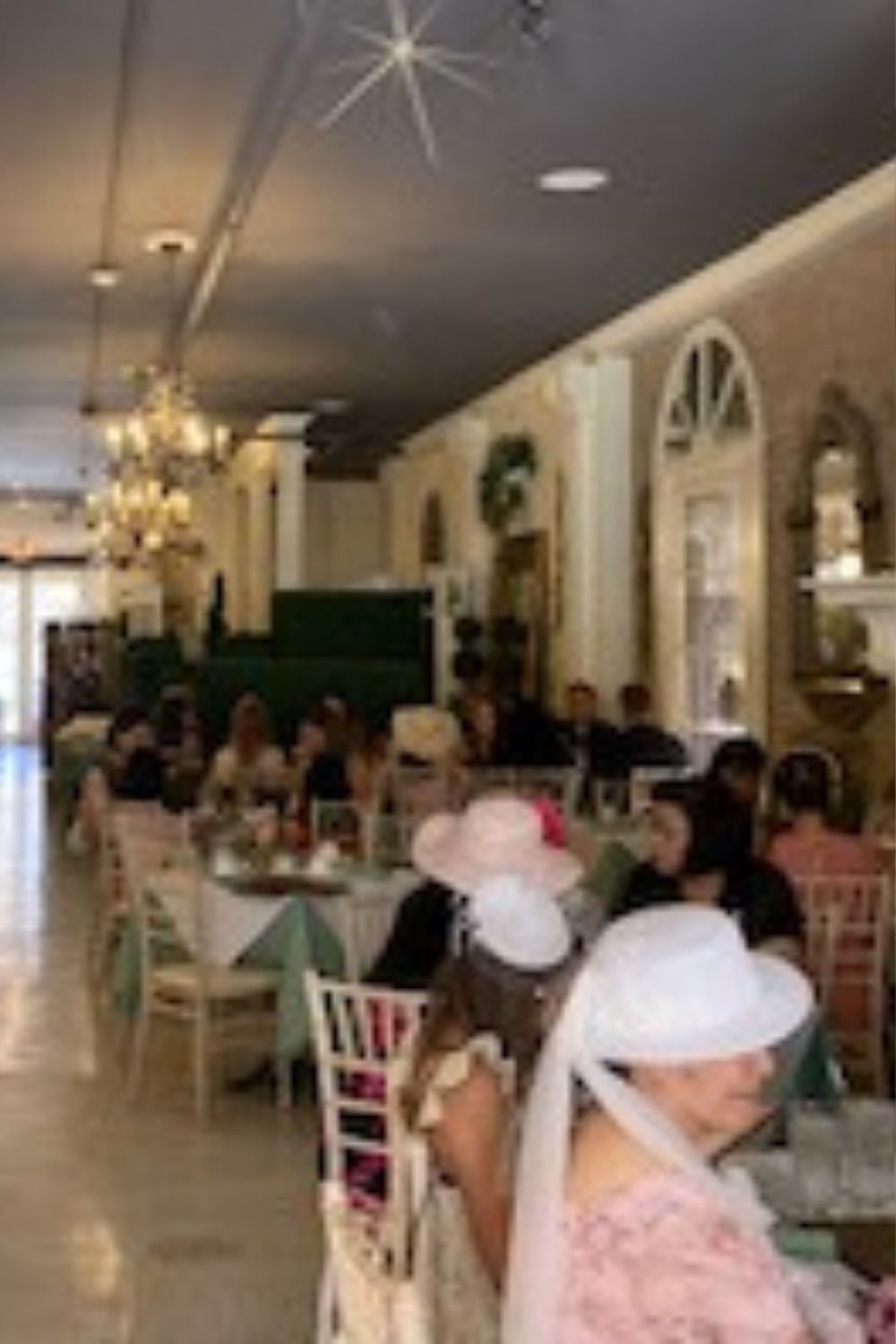
Back in 2005, my friend Helen and I started a tea party business. We hosted private gatherings for groups ranging from about 8 to 40 women.
Many of our guests belonged to the Red Hat Society, but we also hosted birthday celebrations, weddings, and fundraisers.
One of my favorite parts of those events was sharing the story of how afternoon tea became a tradition.
I loved watching everyone gather around the table, enjoy their tea, and visit with one another.
There is something special about setting aside time for friends, enjoying beautiful teacups, and sharing delicious food.
Those experiences are a big part of why I still enjoy writing about tea parties today.
5 Fun Facts About Afternoon Tea
- The Duchess of Bedford helped make it fashionable. The traditional story dates to the 1840s.
- Afternoon tea began with simple refreshments. Elaborate tiered trays developed over time.
- Four o’clock became a familiar teatime. The tradition helped bridge the gap before dinner.
- Afternoon tea and high tea were originally different meals. One was a light social occasion; the other was more substantial.
- Tea gatherings were popular before the Victorian era. The British enjoyed social tea drinking well before the Duchess of Bedford.
How to Enjoy the Afternoon Tea Tradition at Home
You don’t need a grand dining room or expensive china to enjoy afternoon tea.
In fact, I think a small gathering with a friend can be just as special as a formal tea party.
Here are a few of my favorite ways to keep the tradition alive:
- Choose a favorite black tea, Earl Grey, or herbal blend.
- Serve a small assortment of finger sandwiches.
- Bake a batch of Earl Grey Scones.
- Add a little homemade lemon curd alongside the scones.
- Set out your favorite teacups and invite someone over for a visit.
If you’re planning a larger gathering, my tea party planning guide will help you organize the details.
Candiland Tip: Don’t wait for a special occasion to use your favorite teacups. Sometimes a simple afternoon with a friend becomes the sweetest memory.
Frequently Asked Questions About Afternoon Tea
Anna Maria Russell, the seventh Duchess of Bedford, is traditionally credited with popularizing afternoon tea in Britain around the 1840s. Tea gatherings and afternoon refreshments existed before her time.
The familiar formal tradition became fashionable during the Victorian era, although drinking tea socially was already established in Britain.
Early refreshments often included tea, bread and butter, and cake. As the tradition developed, sandwiches, pastries, and eventually scones became familiar additions.
Yes! Afternoon tea continues to be enjoyed at hotels, tearooms, restaurants, and private gatherings throughout Britain and beyond.
A modern traditional afternoon tea menu usually includes finger sandwiches, scones with jam and clotted cream, small cakes or pastries, and a pot of tea.
Keeping the Afternoon Tea Tradition Alive
What I love most about the history of afternoon tea is that the heart of the tradition hasn’t changed very much.
It’s still about sharing something delicious, enjoying a cup of tea, and spending meaningful time with others.
You don’t need a Duchess’s drawing room to create a memorable afternoon!
If you’d like to make your next gathering a little more meaningful, consider sharing The Teacup Story, a beautiful reminder of our value and purpose.
I’d love to know: Have you ever attended a traditional afternoon tea, or do you enjoy hosting tea parties at home?

MammaBearsWorld says
Thanks for the history! My grandmother is British and still has her afternoon tea (although, she also drinks it throughout the day too 😉 ).
My recent post Fun-filled Hours of Coloring
candielm says
How wonderful, I bet she has lots of great stories.
candielm says
It was fun, I closed down a few years ago, but still enjoy talking about it.
Sylver Blaque says
Wow, tea to lift a “sinking feeling”…I can see that. Yes, I think in this case history should definitely repeat itself!
Tracie says
I love afternoon tea. My daughter and I do it at least once a week (but usually more). It is a special thing to take a break in the middle of the afternoon, drink tea and eat something yummy, and talk. A tea party business sounds like a fun thing to do.
I didn't know the history behind it, though. Very interesting.
My recent post Slow Breaths
Kerry says
This is something that I have always wanted to do– have a proper tea someday. I cannot imagine that many of my family would be interested though….maybe when they are older– after these crazy teenage years!
My recent post Taking Time to Create
Alexis Grace says
I love tea!!! I would love t recapture this tradition (even if only once a month!)…
My recent post Laili Lau F/W 2012
hollow tree ventures says
Very interesting! The closest I've come to having afternoon tea was on the floor of my daughter's bedroom. It was heavily attended by dolls and teddy bears. Real tea sounds like it would be nice!
My recent post A Fork, a Sign, and a Cloud walk into a bar…
Tonia@TheGunnySack says
I've never had an afternoon tea but I do love scones! I think I will plan a girls tea party for this spring. That would be delightful!
My recent post Knockoff Sicilian Pepperoni Rolls From Old Chicago
krystle says
Thank you for the history lesson! I'd love to do afternoon tea sometime! It would be nice to feel fancy 🙂
My recent post 10 Early Pregnancy Signs: Some of the Symptoms I Experienced
lorna sadorra says
Hi Candi,
i enjoyed reading your blog about Teas because I’m a tea lover( Matcha & green tea & Ginger lemon ).
i have a ministry among women in our church and we use tea’s as a come on! i have met many other women through this ministry.
by the way I did not received from my email when I subscribe -the Teacup Story printable…can you send it so I can include it in my Tea display at home?
Thank you so much and i pray for you & your tea ministry as well.
Lorna
Helene Hunt says
Thanks Lorna for sharing the history of the tradition of tea and the very uplifting story of the teacup. I will certainly share it at our next Piecemakers day as the ‘Food for Thought’ segment.
Piecemakers is our local group of patchworking ladies that meet monthly in our church hall in Moe, (a country town near Melbourne) to sew quilts which we then gift as love quilts to kids in Foster care in Melbourne, Australia.
God bless, Helene
Kaylene Hudgins says
Awesome history about Afternoon Tea parties.
I started this with one of my granddaughters when she was 4 & now at 9 yrs she insists on a tea party when we are together. Fun Time!
Debbie Dsutlief says
Loved reading the history of an afternoon tea party. Can you send me a recipe for scones that I can serve with a delicious blueberry jam I have. I am giving a tea party for 8 people in an old farm house.
Alycia Gorman says
Loved your story. We had tea rooms when we lived in New York, now residing in Texas they are almost non-existent and if you find a venue, they are sold out. Sad you had to sell your business. I love tea parties. My very favorite tea is Lady Grey Black Tea.