

Want to know how to grow black tea at home? Black tea comes from the Camellia sinensis plant, a hardy shrub you can grow outdoors in warm climates or in a pot anywhere. Here is how to start it from seed, care for it, harvest the leaves, and process them into black tea.
Tea is one of the oldest drinks in the world. Legend says it was discovered in China nearly 5,000 years ago, and in ancient times it was used mostly in medicine and rituals. Today it is enjoyed all over the world, and it even inspired the tradition of afternoon tea.
Black tea has gained a lot of popularity, with its antioxidants and a small caffeine kick in the morning, and it is just a tasty drink. Tea plants need very little maintenance, so you can grow your own. Read on to learn how to grow, process, and store your black tea!
Quick Look
- 🌱 Plant: Camellia sinensis, the tea plant
- 🗺️ Outdoors: hardy to about zone 8, much of the southern US
- 🪴 Elsewhere: grow it in a pot or greenhouse
- 🏝️ Soil: well drained, sandy and acidic
- 📏 Size: about 3 to 7 feet tall
- ⏳ First Harvest: when the plant is about three years old
Quick Answer
To grow black tea, plant Camellia sinensis seeds in a tray of compost, keep the soil moist until they sprout, then move the seedlings to a sunny spot in well drained, sandy, acidic soil, outdoors in zone 8 or warmer or in a pot elsewhere. Prune for bushy growth and wait about three years. Harvest the top two leaves of each shoot, then wither, roll, oxidize and dry them to make black tea.
Jump to:
Why Grow Your Own Tea
Click to see why
- One plant, many teas. Green, oolong and black tea all come from the same plant.
- It is low maintenance once established.
- It is pretty. Tea is often grown as an ornamental, with sweet scented white flowers in the fall.
- It is long lived, a plant you can enjoy for decades.
- It is rewarding. Nothing beats a cup made from leaves you grew yourself.
Why You’ll Love Growing Black Tea
- A fun, patient hobby with a delicious payoff.
- Works in a pot, so you don’t need a big garden.
- Several harvests each spring and summer once mature.
- Pairs with an herb garden. See my herbal tea garden ideas.
- Grow it indoors with my indoor tea garden guide.
- Learn how tea is really made, from leaf to cup. Read how tea is made.
Supplies You’ll Need to Grow Black Tea
- Tea plant seeds (Camellia sinensis)
- Potting soil or compost
- A seed growing tray
- Sphagnum moss or vermiculite, to help the roots in a container.
- Basic gardening tools
- Water and a bowl.
Growing Tea in the Ground vs a Container
- In the ground: tea shrubs are hardy to about zone 8. The US is divided into hardiness zones with similar temperatures and weather, and zone 8 covers much of the southern United States. If you live there, you can grow a tea shrub in your backyard.
- In a container: if you live somewhere colder, grow tea in a greenhouse or in a pot you can bring inside for winter. Use a sandy, well draining mix of potting compost with sphagnum moss and potting sand, perlite or vermiculite.
- Either way: tea needs well drained, sandy, acidic soil and plenty of light.
- Indoors: keep it warm but not hot. More tips in my indoor tea garden guide.
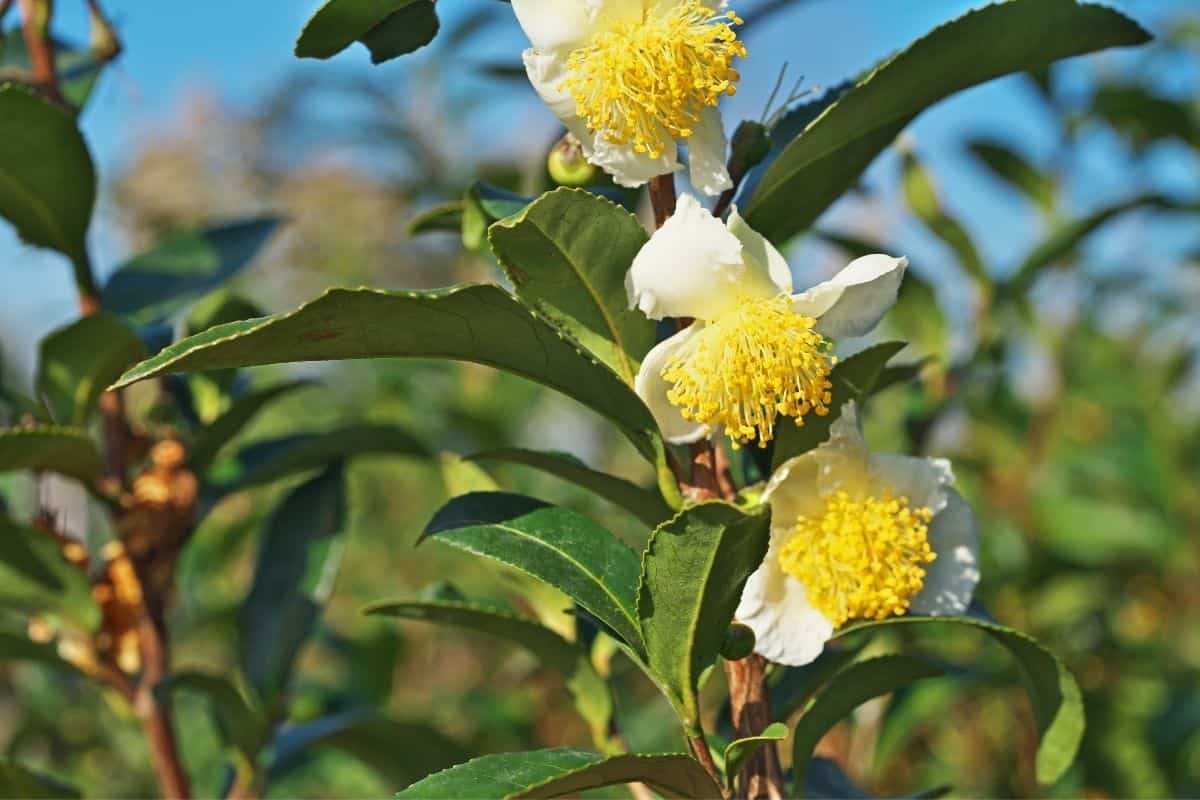
The Camellia sinensis plant is a small bush that grows about three to seven feet tall, and taller if left unpruned. It flowers in the fall with small white blooms that have a sweet fragrance.
How to Grow Black Tea
- Check your climate and soil. Make sure your area and soil suit tea: zone 8 or warmer for growing outdoors, and well drained, sandy, acidic soil. In a container, add sphagnum moss to the potting soil.
- Plant the seeds. Sow your tea seeds in a tray of compost or potting soil, water them thoroughly, and keep the soil moist until the seedlings sprout.
- Give them light and gentle water. Choose a spot with plenty of sunlight but not too much heat, such as near a sunny window (not on top of a radiator). Once the first set of leaves appears, keep the soil around the roots damp but not wet, so you don’t drown the seedlings.

- Transplant the shoots. After about four weeks you should see new woody shoots. Move them to a sunny spot in your garden, or into a container that you set in the sun.

- Prune for a bushy plant. When your tea plant reaches about six inches tall, prune the stems back to encourage bushy growth. Water regularly, about twice a week in summer and much less in winter, letting the soil dry a little between waterings.
- Be patient. Tea plants are ready to harvest when they are about three years old. As your plant matures its branches spread wider, which is normal and a sign of a healthy plant.

- Harvest the leaves. Tea plants rest in winter. In spring and summer, pick the first two leaves (and the bud) from each shoot. The leaves will be bright green, and picking them encourages a bushier plant.

- Process them into black tea. Wither, roll, oxidize and dry the leaves (see the steps below), then brew your own pot of tea.
Tea Growing Tips
- Be careful of the cold. Growing tea is risky where average winter lows fall below 0°F, challenging between 0 and 15°F, and fairly safe above 15°F. It only takes one very cold year to undo many years of growth.
- Snow and frozen ground. Snow is common in tea growing countries like Japan, China and Georgia, but it doesn’t last long. Persistent snow, ice or hard frozen ground makes growing tea riskier.
- Warm, not hot. Tea likes warm, humid weather, but intense heat and sun can stress the plant and turn the leaves yellow.
- Plenty of water. Tea plants in the wild get about 50 inches of rain a year, so water well in dry spells.
- Feed it as it grows. Your tea plant keeps growing throughout its life and needs nutrients to get bigger and stronger.
- Going organic? Learn more about organic tea.
How Tea Leaves Are Processed into Black Tea
Green, oolong, white and black tea all come from the leaves of the same Camellia sinensis plant (even purple tea is a variety of it). The difference is processing. Green tea is made from unoxidized leaves, oolong is partly oxidized, and black tea is fully oxidized, which darkens the leaves to brown.
- Withering: indoors, fans blow air over the leaves while the humidity is carefully monitored. Over about 12 hours the leaves wilt and wither.
- Rolling: the leaves are rolled to break open the cell walls and start the oxidation that creates black tea’s color and flavor. This takes anywhere from 5 minutes to an hour, by hand or by machine.
- Oxidizing: the rolled leaves rest and react with the air, for up to several hours.
- Drying: the leaves go into a drying chamber, and the heat stops the oxidation and locks in the quality.
Here is a helpful video on growing your own black, green and oolong tea at home:
Once your tea is made, keep it fresh with my tips on how to store loose leaf tea and whether tea expires, then brew it with a tea kettle. Homemade tea is loose leaf, so here is how to make loose leaf tea. Love bergamot? Try Earl Grey or Lady Grey.
Growing Black Tea FAQs
Yes. Black tea comes from the Camellia sinensis plant, which you can grow outdoors in zone 8 or warmer, or in a pot or greenhouse in colder areas.
Tea plants are ready for harvesting when they are about three years old. Be dedicated and patient!
Yes. Green, oolong, white and black tea all come from Camellia sinensis. The difference is how the leaves are processed, with black tea being fully oxidized.
Tea needs well drained, sandy, acidic soil. In a container, mix potting compost with sphagnum moss and sand, perlite or vermiculite.
Pick the first two leaves, plus the bud, from each shoot in spring and summer. Harvesting them encourages a bushier plant.
Growing tea is risky where winter lows fall below 0°F, challenging between 0 and 15°F, and fairly safe above 15°F. In colder areas, grow it in a pot you can bring inside.


