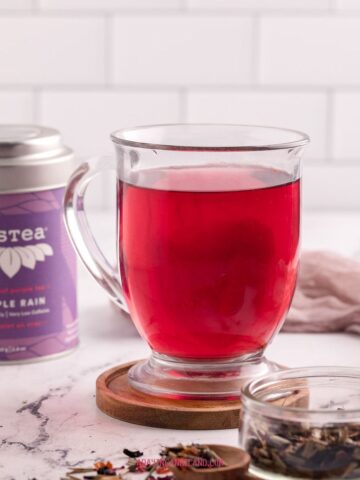


Color changing tea turns from blue to purple or pink right in your cup when you add a squeeze of lemon or lime. Here is how it works, the difference between butterfly pea tea and purple tea, and fun ways to use it.

Tea enthusiasts worldwide have long been fascinated with the unique flavors, colors and aromas of different teas. Two that have gained immense popularity in recent years are butterfly pea tea and purple tea, the most popular of the colorful teas.
While both have their own distinctive taste, brewing method and story, they differ in several ways. Here is everything you need to know about blue tea vs purple tea.
Quick Look
- 💙 Butterfly Pea Tea: a caffeine free herbal tea that brews deep blue
- 💜 Purple Tea: a purple leaf variety of the tea plant, grown in Kenya
- 🍋 The Magic: lemon or lime juice shifts the color to purple or pink
- 🔬 Why: natural pigments called anthocyanins react to acid
- ⏳ Steep Time: about 3 to 5 minutes
- 🍹 Use It In: lemonade, ice cubes, mocktails, smoothies and more
Quick Answer
Color changing tea is tea that changes color when you add an acid like lemon or lime juice. The most popular is butterfly pea flower tea, which brews a deep blue and turns purple, then pink, as the acid is added. The change comes from anthocyanins, natural plant pigments that shift color with pH. Purple tea, from a purple leaf variety of the tea plant, is another colorful tea rich in anthocyanins.
Jump to:
Why Color Changing Tea Is So Fun
Click to see why it is fun
- It is a show in a cup. Guests love watching blue turn to purple with a squeeze of lemon.
- It is all natural. The color comes from the flowers or leaves themselves.
- It teaches a little science, a fun way to explore pH with kids.
- It is versatile, hot, iced, or in drinks and desserts.
- Butterfly pea tea is caffeine free, so you can enjoy it any time of day.
Why You’ll Love Color Changing Tea
- Stunning colors: deep blue, violet and pink.
- A mild, earthy flavor that pairs well with citrus.
- Perfect for parties, tea time and mocktails.
- Easy to make hot or as an iced tea.
- Great in lattes, like my butterfly pea latte.
- Contains anthocyanins, a natural antioxidant pigment.
What You’ll Need
- Color changing tea: butterfly pea flower tea or purple tea.
- Hot water for brewing.
- A glass teapot or clear cups, so you can see the color change.
- Lemon or lime juice to change the color.
- Optional: hibiscus tea for a pink or red shift, and honey or simple syrup to sweeten.
Butterfly Pea Tea vs Purple Tea
| Butterfly Pea Tea | Purple Tea | |
|---|---|---|
| What it is | Herbal tea from butterfly pea flowers | A purple leaf variety of the tea plant |
| Plant | Clitoria ternatea (Asian pigeonwings) | Camellia sinensis |
| Grown in | Southeast Asia, especially Thailand | Kenya, first found in Assam and China |
| Color | Deep blue, turns purple or pink with acid | Purple hued |
| Flavor | Mild, earthy, a little sweet | Mild and floral, like a gentle oolong |
| Caffeine | None | Low |
| Best served | Hot or iced | Hot |
Butterfly pea tea, also called blue pea flower tea, is an herbal infusion made from the flowers of the Clitoria ternatea plant, also known as Asian pigeonwings. It has long been enjoyed in Southeast Asia, particularly Thailand, Vietnam and Malaysia, and is now loved worldwide for its stunning blue color. Like most herbal teas, it is caffeine free.
Purple tea comes from the same Camellia sinensis plant as green and black tea, but from a variety with purple leaves, high in anthocyanins. It was first found in Assam and parts of China, and today it is grown mostly in Kenya’s high altitude regions. It has a mild, slightly floral taste and is relatively new to the tea scene. Curious how leaves become tea? Read how tea is made.
How to Make Color Changing Tea
- Heat your water. Bring fresh water to a boil.
- Steep the tea. Add the butterfly pea flowers or purple tea and steep for about 3 to 5 minutes, depending on how strong you like it.

- Add the citrus. Squeeze in lemon or lime juice and watch the color shift from blue to purple. Add a little more for pink.

- Serve and enjoy. Pour into clear cups so everyone can see the color, and add a lemon slice to keep the color changing.
- Or serve it iced. Butterfly pea tea is lovely over ice. Try my cold brew tea method for a smooth iced version.
Why Does the Tea Change Color?
Color changing tea transforms based on pH. Butterfly pea flowers give the brew a vibrant blue hue, and when an acid like lemon juice is added, the pH drops and the color shifts from blue to purple or even pink.
- The pigment: anthocyanins, natural water soluble pigments found in many plants, change shade as the pH changes.
- More acid, more pink: a little lemon turns it violet, and more turns it pink.
- Add hibiscus for a pink or red color. Try my hibiscus green tea.
- A fun science lesson, a delicious way to explore pH and chemical reactions in the kitchen.
- Keep it fresh. Store dried flowers and leaves airtight; here is how to store loose leaf tea.
Color Changing Tea Recipe Ideas
- Color changing lemonade: mix the tea with lemonade and add lemon slices to watch it shift. Pair it with my lavender lemonade.
- Ice cubes or popsicles: freeze the tea, with a few flower petals inside, for a delightful surprise as they melt.
- Mocktails and cocktails: experiment with mixers and garnishes, like an Arnold Palmer or a blue matcha latte.
- Fruit infusions: add berries or citrus to boost the flavor and the color change.
- Sorbet or granita: use the tea as a colorful frozen dessert base.
- Smoothies: blend with fruit, yogurt and ice. See my blue smoothie bowl.
- Jellies and gelatin desserts, or a fun tea bomb.
Experiment with quantities and extras to suit your taste. Love colorful drinks? Try my iced matcha lattes and explore more floral teas.
Color Changing Tea FAQs
No. Butterfly pea flower tea is an herbal tea, so it is naturally caffeine free.
It has a mild, earthy flavor with sweet notes and a subtle aroma. A squeeze of lemon adds brightness as well as color.
Purple tea is a colorful tea rich in anthocyanins, the same type of pigment found in butterfly pea flowers. Butterfly pea tea has the most dramatic color change.
Adding more acid, like extra lemon or lime juice, or adding hibiscus tea, shifts the color from purple toward pink.
Steep butterfly pea tea or purple tea for about 3 to 5 minutes, depending on how strong you like it.
Yes. Butterfly pea tea is lovely iced, and it works beautifully in lemonade, mocktails and ice cubes.